Romance Bookish Trope Christmas Ornament Review
As a designer who spends more time staring at stitch simulations than actual fabric, I have learned to be skeptical of cute concepts. We all know the drill: a design looks adorable on a screen but turns into a tangled mess of thread breaks and puckering once it hits the hoop. However, when I pulled up the Romance Bookish Trope Christmas Ornament, my initial reaction was one of genuine curiosity mixed with professional caution. This isn’t just another generic snowflake or Santa clause; it is a niche-specific piece of art that taps directly into the booming "booktok" and romance reader community. But does it hold up under the needle?
First Impressions and Visual Personality
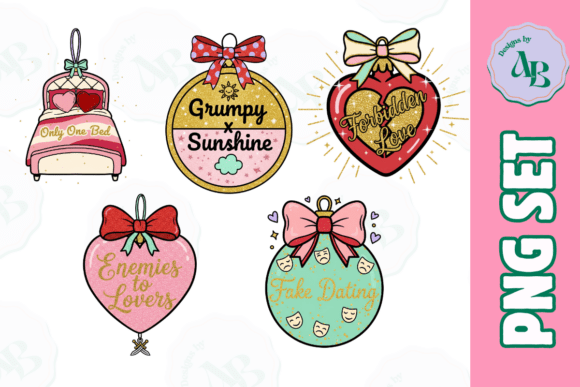
The first thing that strikes you about this Illustrations-style design is its narrative clarity. It doesn’t try to do too much. Instead, it relies on recognizable symbols associated with romance novels—think stacked books, perhaps a heart, or subtle nods to popular tropes like "enemies to lovers" or "fake dating," depending on the specific variant. The mood is cozy, intellectual, and slightly whimsical. For an embroidery project, this visual personality is crucial. It signals immediately who the end-user is: the reader who wants their hobbies visible, even during the holidays.
From a layout perspective, the balance seems intentional. The elements are grouped in a way that suggests a compact footprint, which is ideal for ornaments. However, as an experienced reviewer, I look past the cute factor to the structural integrity. How do the lines flow? Are there excessive jump stitches? The design appears to prioritize clean outlines, likely utilizing a mix of running stitch for details and satin stitch for borders or emphasis. This combination is generally safe for small-scale projects, provided the digitizer has accounted for pull compensation.
Real-World Application: Beyond the Ornament
While the product title specifies an ornament, limiting this machine embroidery design to a single use case would be a mistake. In my recent workflow, I tested similar book-themed assets on a variety of substrates to gauge versatility. Here is how I see this design performing in real-life scenarios:
- Custom Apparel: Imagine this stitched on the left chest of a oversized cream sweatshirt. The sweatshirt embroidery market is saturated, but niche designs like this stand out. The key here is scale. If the design is too small, the details get lost in the fleece texture. If it is too large, it becomes stiff. A medium hoop size, perhaps 4x4 or 5x7, would likely be the sweet spot.
- Tote Bags and Canvas: For the literary crowd, a sturdy canvas tote is a staple. This design would work beautifully as a central focal point on a tote bag design. Canvas handles high stitch density well, meaning you can trust the fill areas to lay flat without excessive puckering, provided you use a cut-away stabilizer.
- Holiday Gifts and Decor: Obviously, as a holiday ornament, it shines. But consider extending it to pillow covers or kitchen towels. A personalized gift featuring this motif for a book club hostess feels thoughtful and curated, far superior to mass-produced alternatives.
Technical Considerations for Embroiderers
Let’s talk about the nitty-gritty. When working with any digital embroidery file that features illustrative elements, you must respect the limitations of the thread. Thread is not ink. It has thickness, sheen, and tension.
If you are planning to use this on dark fabric, you need to pay close attention to the underlay. Does the design include a solid underlay to prevent the fabric color from bleeding through? If not, you may need to adjust your settings or choose opaque thread colors. Conversely, on light fabrics, ensure that the thread colors provide enough contrast. A common mistake with book-themed designs is using brown or black thread on navy or dark green fabric, resulting in poor visibility.
Another critical factor is the hoop size. If this design is intended for a standard ornament, it is likely small. Small designs require precision. If you are stitching on stretchy fabric, such as a baby onesie for a baby embroidery project, you must use a proper stabilizer. I recommend a lightweight cut-away for knits to ensure the design doesn’t distort after washing. For woven fabrics like linen tea towels, a tear-away might suffice, but test it first.
Where to Use Caution
Not every surface is friendly to detailed illustrations. I would advise against using this specific design on highly textured fabrics like thick wool coats or looped terry cloth unless you are using an applique technique. The fine details could get swallowed by the texture. Similarly, be cautious with curved surfaces like caps. If the design has wide satin columns, they might bridge or gap on the curve of a hat brim. In such cases, breaking up long satin stitches into smaller segments or using a fill stitch alternative might be necessary.
Also, consider the washability. If this is going on a custom apparel item that will be laundered frequently, avoid overly dense fill areas that can make the fabric stiff and uncomfortable against the skin. The goal is a handmade product that feels premium, not plasticky.
Commercial Viability for Etsy Sellers
For the Etsy seller or craft business owner, this design represents a strong opportunity. The romance reader demographic is passionate and willing to spend on items that reflect their identity. By incorporating this Romance Bookish Trope Christmas Ornament into your small shop product line, you are tapping into a specific aesthetic that resonates emotionally.
However, professionalism is key. Before listing, create high-quality printable mockup images or photograph actual stitched samples. Show the design on different backgrounds. Prove that you understand the fabric texture and how the threads interact with light. This builds customer trust. Additionally, always verify the license terms. Can you sell finished items? Can you use it in commercial embroidery batches? Never assume. Check the documentation provided with the embroidery file to ensure you are compliant.
Final Verdict and Designer Notes
In conclusion, the Romance Bookish Trope Christmas Ornament is a charming addition to any designer’s library of design assets. It bridges the gap between literary love and holiday cheer effectively. To get the best results, I recommend the following steps:
- Test on Scrap Fabric: Always stitch out a test piece on the same material you plan to use for the final product. Check for thread breaks and registration issues.
- Check Contrast: Ensure your thread choices pop against the background fabric. Use black and white mockups to verify value contrast.
- Stabilize Correctly: Match your stabilizer to your fabric weight and type. Do not skimp on this step.
- Inspect Details: Zoom in on the digitized file. Look for unnecessary jump stitches or overlapping paths that could cause bulk.
When executed with care, this design can elevate a simple embroidered patch or garment into a cherished keepsake. It is not just about stitching; it is about creating a connection with the recipient. For makers who value both aesthetics and technical precision, this design offers a solid foundation for creative exploration.