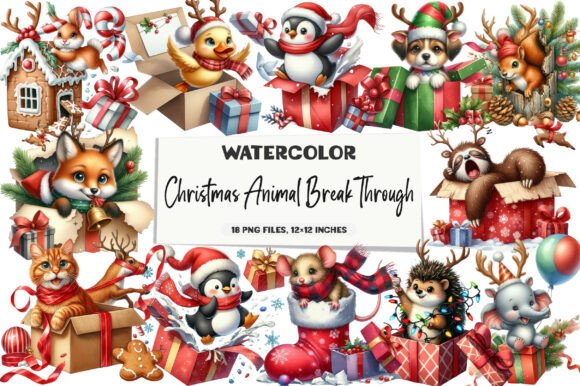
Review: Christmas Animal Break Through Clipart for Embroidery
As a designer who has spent countless hours digitizing and stitching out holiday motifs, I have learned that not every cute illustration translates well to thread. The gap between a digital Illustrations file and a tangible finished product is where many craft businesses stumble. This season, I took a close look at the Christmas Animal Break Through Clipart to determine if it holds up under the needle. My goal was not just to admire the aesthetic, but to evaluate its practicality for real-world embroidery project applications, from high-volume Etsy seller inventories to bespoke personalized gift commissions.
First Impressions and Visual Personality
The initial appeal of Christmas Animal Break Through Clipart lies in its playful narrative. The concept of an animal seemingly breaking through a surface or frame creates immediate depth and interaction. For embroidery, this is a double-edged sword. Visually, it suggests movement and whimsy, which is perfect for holiday embroidery that needs to stand out on crowded social media feeds or busy craft fair tables. The mood is lighthearted and inviting, targeting customers looking for charm rather than formal elegance.
However, from a technical standpoint, "break through" effects often rely on subtle shading or overlapping layers in digital art. In embroidery, we do not have pixels; we have thread paths. My primary concern was whether the design relied too heavily on visual tricks that would vanish when converted into satin stitch or fill stitch patterns. A successful machine embroidery design must communicate its message through texture and color contrast, not just digital opacity. Fortunately, the core shapes in this clipart appear bold enough to survive the translation from screen to fabric, provided the digitizer has respected the limitations of thread.
Real-World Application: The Holiday Sweatshirt Test
To truly test the viability of Christmas Animal Break Through Clipart, I imagined a specific client scenario: a custom order for a family set of matching sweatshirt embroidery pieces. The client wanted something festive but not overly traditional—no standard snowflakes or static reindeer. They wanted personality.
In this context, the design shines. Placed on the left chest of a heavyweight cotton blend sweatshirt, the animal motif acts as a focal point without overwhelming the garment. The "break through" element adds a three-dimensional quality that flat prints lack. When stitched out, the interplay of thread colors against the fabric background becomes crucial. If the animal is light-colored and the sweatshirt is dark, the design pops. If the contrast is low, the details get lost. This reinforces the importance of testing your embroidery file on the actual garment color before committing to a full production run.
Beyond apparel, this design is versatile. It works exceptionally well as a tote bag design, where the larger surface area allows for a bigger hoop size, capturing more detail. It also translates nicely to embroidered patch formats, which can be ironed onto jackets or hats later, offering flexibility for small shop product lines that need to minimize inventory risk.
Navigating Technical Challenges and Fabric Constraints
While the aesthetic is strong, using Christmas Animal Break Through Clipart requires careful attention to technical constraints. Not every fabric or hoop size is suitable for this type of illustrative work.
- Hoop Size and Detail: If you are working with a small 4x4 hoop, you must ensure the design scales down without losing integrity. Tiny details in the animal’s face or the "break" effect may turn into a messy clump of threads if the stitch density is too high or the elements are too small. Always check the minimum recommended size.
- Fabric Texture: Textured fabrics like terry cloth towels or fuzzy fleece can swallow fine running stitch outlines. For these materials, consider using an applique design approach if available, or increase the satin stitch width to ensure visibility.
- Stretchy Fabrics: When applying this to baby clothes or knit caps, stabilization is non-negotiable. The tension from the stitches can cause puckering, especially if the design has dense fill areas. A cut-away stabilizer is often safer than tear-away for garments that will be washed frequently.
- Dark Fabrics: Stitching on black or navy requires strategic underlay and possibly a backing layer of white thread to prevent the fabric color from showing through lighter thread colors. This is critical for maintaining the clarity of the Illustrations style.
Commercial Value and Brand Consistency
For craft business owners and commercial embroidery professionals, the choice of design assets directly impacts brand perception. Using Christmas Animal Break Through Clipart signals a modern, playful brand identity. It appeals to younger demographics and parents looking for unique baby embroidery items or fun custom apparel.
However, consistency is key. If your brand is known for minimalist, elegant monograms, this whimsical design might feel out of place. But if your shop specializes in cheerful, narrative-driven handmade product lines, this clipart fits seamlessly. It enhances buyer engagement because it tells a story. Customers are more likely to share photos of a quirky, well-stitched animal on their tea towels or pillow covers than a generic geometric shape. This organic sharing drives traffic and builds customer trust in your craftsmanship.
Practical Designer Notes for Best Results
Before you load this digital embroidery file into your machine, follow these practical steps to ensure a professional result:
- Test on Scrap Fabric: Never stitch directly on your final product. Use a scrap piece of the same fabric and stabilizer combination to check for puckering, thread breaks, or color clashes.
- Check Thread Contrast: View your design in black and white on your computer screen. If the different elements blend together in grayscale, they will lack definition when stitched. Adjust your thread colors to ensure high contrast.
- Verify Licensing: Before selling finished product items or using the design in printable mockup marketing materials, confirm the license terms. Ensure you have commercial use rights if you plan to sell the physical items.
- Inspect Stitch Types: Look at the digitizing. Are long spans supported by proper underlay? Is the satin stitch width appropriate for the scale? Poor digitizing can lead to frequent thread breaks and frustration.
- Consider the End Use: If the item is for a child, avoid small, detachable parts if using applique, and ensure all threads are secure. For holiday gifts that might be displayed rather than washed, you can push the detail level higher.
In conclusion, Christmas Animal Break Through Clipart is a promising asset for designers willing to pay attention to the technical details. It offers a fresh take on holiday embroidery, moving away from clichés toward interactive, story-driven designs. By respecting the limitations of fabric and thread, and by testing thoroughly, you can transform this digital illustration into a high-value design assets for your small business merchandise. Whether you are creating a single personalized gift or a full line of Etsy listings, this design has the potential to delight customers and elevate your craft.